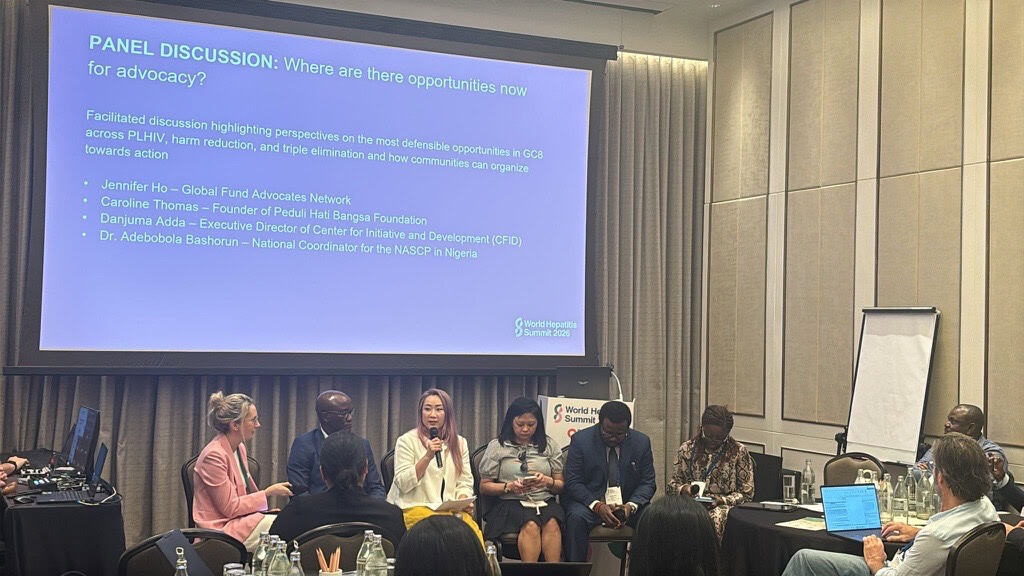
As the Global Fund’s Grant Cycle 8 (GC8) unfolds with reduced allocations and compressed timelines, the need for strategic, coordinated hepatitis advocacy has never been more urgent. In April and May 2026, Jennifer Ho, Operations and Programme Manager for the Global Fund Advocates Network Asia-Pacific (GFAN AP), participated in two critical sessions focused on advancing hepatitis integration priorities in GC8—both co-organised by the Clinton Health Access Initiative (CHAI) and the World Hepatitis Alliance (WHA). The first session at the World Hepatitis Summit 2026 in Bangkok (April 30) brought together over 60 participants, followed by a global webinar (May 7) that drew 97 participants—advocates, community representatives, civil society, government, and Global Fund representatives worldwide who were unable to join the session at WHS 2026.
Session Objectives: Translating Policy Into Action
Both sessions shared a common purpose: helping hepatitis advocates, community and civil society representatives translate GC8’s supportive policy framework—including specific language in the Global Fund Programme Essentials templates—into prioritised, defensible, and funded interventions. Specifically, the sessions aimed to:
- Launch and share the joint CHAI-WHA GC8 Toolkit to help advocates translate policy into actionable investment asks for hepatitis, harm reduction, and triple elimination
- Explore concrete opportunities to strengthen hepatitis-integration investments in GC8, drawing on lessons from GC7 and emerging priorities
- Support participants to identify immediate actions to influence country dialogue, application development, and prioritization processes over the critical 3-6 month window
With the first submission window (June 8, 2026) approaching rapidly and most countries facing tighter funding envelopes, these sessions emphasized urgency: the time to act is now.
GFAN AP’s Key Intervention Points
At the World Hepatitis Summit workshop in Bangkok (April 30, 2026), Jennifer served as a panelist in the “Stakeholder Reflections: From Opportunity to Action” segment alongside advocates from Indonesia, Nigeria, and Ministry of Health representatives. The panel addressed two fundamental questions: Where are the most credible entry points in GC8 right now? And what does it take to convert those into funded priorities at country level?
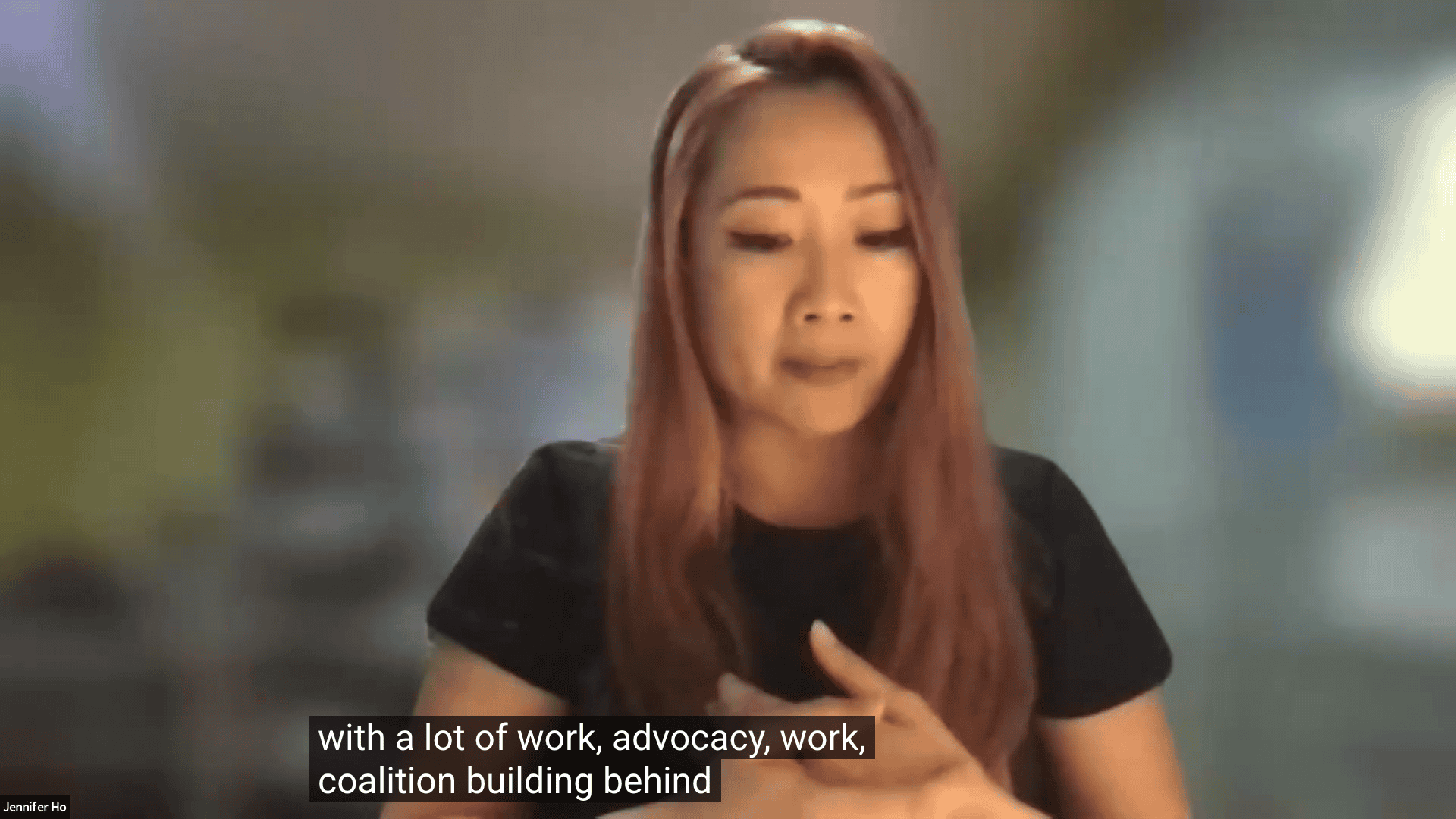
In the follow-up global webinar (May 7, 2026), Jennifer presented a 10-minute intervention on “The Power of Community Engagement in GC8,” followed by Q&A responses on what makes or breaks advocacy during country dialogue.
Across both sessions, her key intervention points centered on four strategic advocacy positions and concrete logistical entry points:
Strategic Positioning:
- Integration as Efficiency and Sustainability: Communities aren’t asking countries to “add hepatitis”—they’re advocating for integration that optimizes existing HIV platforms while preventing future costs. Hepatitis C treatment cures patients in 8-12 weeks, preventing decades of chronic disease and catastrophic health system costs. Every dollar invested today saves multiples in avoided hospitalisations tomorrow. This is fiscal responsibility that strengthens health system sustainability—exactly what GC8 prioritises.
- Equity and Human Rights for Criminalised Populations: In many countries, populations most affected by hepatitis face criminalisation—drug use, sex work, same-sex relationships—and pregnant women in marginalised communities face severe barriers to accessing antenatal care. Countries cannot credibly claim equity while excluding harm reduction and hepatitis services for criminalized communities. This is both a human rights imperative and logical consistency with GC8’s prioritisation criteria.
- Gender Equity and Intersectional Advocacy: If you are an advocate for hepatitis, you are also an advocate for HIV, for women, for people who use drugs, for newborns, for marginalised communities. Hepatitis advocacy is inherently intersectional because the disease doesn’t exist in silos—and neither do the people affected by it.
- Triple Elimination as Political Anchor: Triple elimination bridges HIV, hepatitis B, and syphilis prevention, testing, and treatment with maternal-child health into one unified investment story that ministries can align behind—one integrated budget line and platform serving women, newborns, and families.
Concrete Entry Points Across the Grant Cycle:
Jennifer emphasised that strategic positioning alone isn’t enough. Communities need concrete entry points where engagement shapes outcomes:
- Country Dialogue Phase (Now-June): The most critical window. Engage CCMs early—if hepatitis lacks representation, work with allied civil society members from HIV, harm reduction, and women’s health communities. Show up with specific, costed interventions using the CHAI/WHA toolkit, not vague requests.
- Funding Request Development: Unified voices win; siloed advocacy loses. Build cross-sectoral coalitions bringing HIV, hepatitis, harm reduction, women’s health, and MCH actors together around shared asks backed by technical evidence.
- TRP Review Phase: Monitor TRP feedback closely. If applications go to iteration, mobilize coalition partners to ensure hepatitis elements aren’t cut during revisions.
- Grant-Making and Implementation: Community engagement doesn’t end at TRP approval. Stay engaged through grant negotiations and establish monitoring mechanisms to track whether hepatitis components are implemented as designed.
The Urgency of Now
Both sessions drove home one message: The window is now. Advocates have unprecedented policy support, proven integration models, costing tools, and a $12.64 billion allocation cycle. What’s needed is coordinated action bringing hepatitis advocates and natural allies—HIV, women’s health, harm reduction, and key population communities—to decision-making tables at CCMs, in country dialogues, during TRP response, and throughout grant-making and implementation.
Hepatitis integration isn’t optional—it’s how countries actually achieve the HIV, maternal health, and equity goals they’re already committed to. If hepatitis advocates aren’t at the table, allies must carry their asks. Because ultimately, these are shared asks for integrated, equitable, sustainable health systems that leave no one behind.
For advocates across the Asia-Pacific region and globally: it’s never too late to engage—but not engaging means surrendering an opportunity at a critical moment when lives hang in the balance. TRP review and grant negotiations remain entry points even if country dialogues have advanced, but the most influence happens early. Contact your CCM representatives, build coalitions, prepare evidence packages, and ensure hepatitis has a seat at the decision-making table for GC8.
The opportunity is real—but not automatic. And the cost of inaction is measured in lives that could have been saved, infections that could have been prevented, and communities left behind. Let’s make it count.