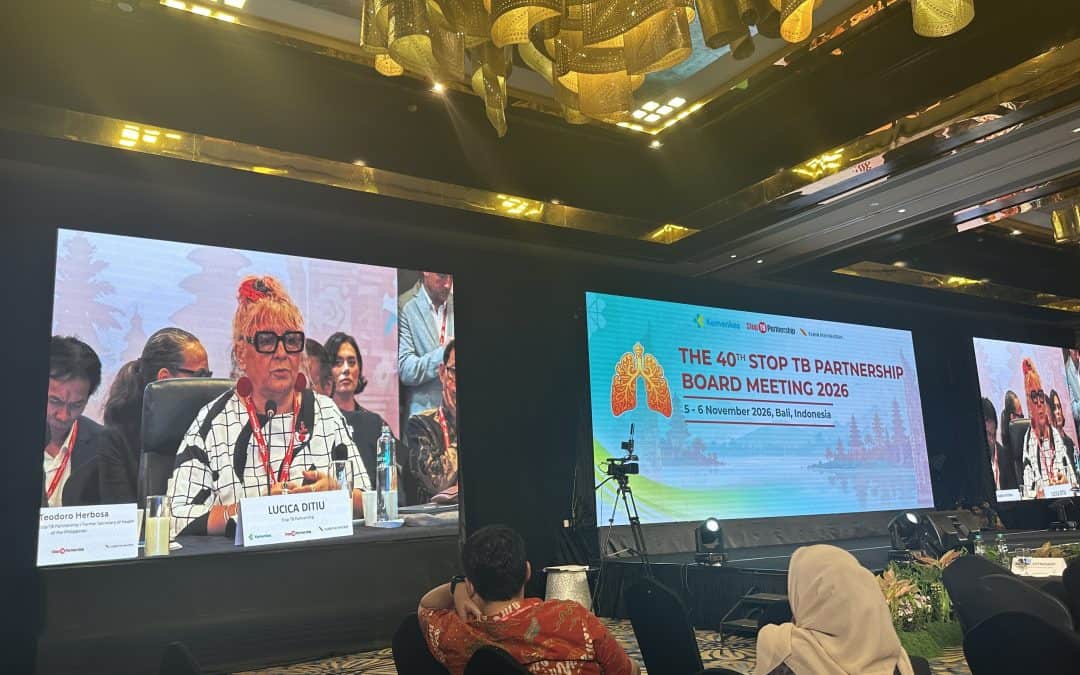
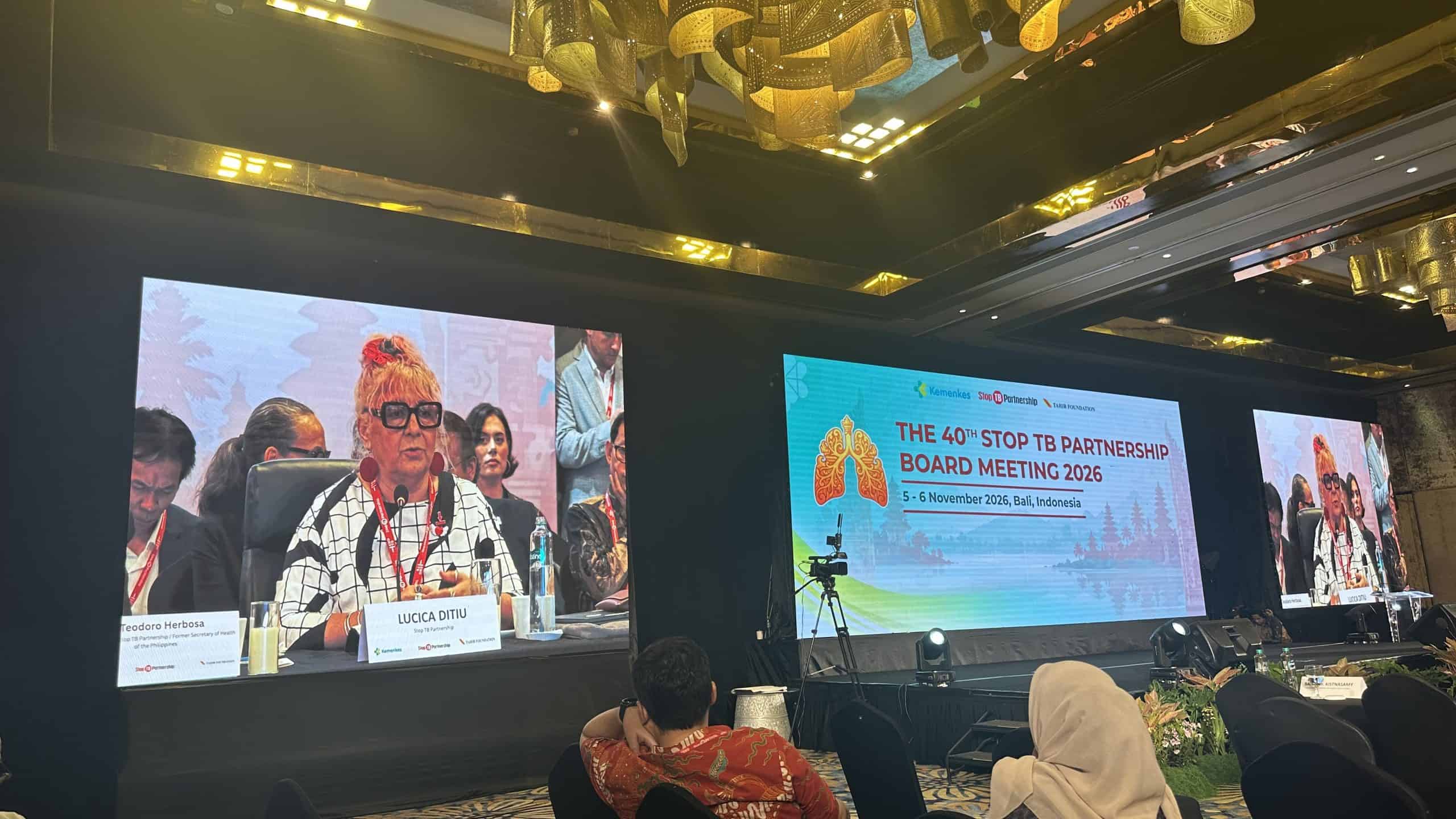
Reflections from the session on “The Future on the TB Response“: Intervention of Mark Edington, Head of Grant Management of the Global Fund to Fight AIDS, Tuberculosis and Malaria (Global Fund) at the 40th Stop TB Partnership Board Meeting, 5-6 November, Bali, Indonesia.
At the 40th Stop TB Partnership Board Meeting in Bali, Indonesia, Global Fund Head of Grant Management Mark Edington described the financial choices facing TB programmes as Grant Cycle 8 (GC8) begins. His intervention connected tighter allocations with a larger question: how can countries protect effective services while building a financing model that can sustain and expand the TB response?
Prioritising for impact
GC8 country allocations are about 17.9% lower than those in Grant Cycle 7. Edington said that his calls for more rigorous prioritisation, while emphasising that prioritisation should not simply mean doing less. Decisions should be guided by epidemiology, impact, equity and value for money, protecting the interventions most likely to reach people and improve outcomes.
For TB programmes, he said, integration can help improve outcomes and efficiency. That means connecting drug-susceptible and drug-resistant TB services, and linking TB care with primary health care and wider health systems. Edington said early GC8 funding requests show movement from general intentions to more operational plans. Around two-thirds include programme commitments, particularly for diagnostics and medicines. He also commended Bhutan’s commitments to purchase both first- and second-line TB drugs.
These commitments need to translate into affordable, reliable access. Edington emphasised that countries must buy TB medicines at the lowest available international cost so that limited budgets go further. He noted growing interest in linking TB financing with national health insurance, but said results so far are mixed. Heath taxes and blended financing for community health workers are among the newer approaches that will need to be assessed.
A central implementation risk, he argued, is whether committed funds are actually released and spent. Timely disbursement from finance ministries and effective use by health ministries are essential if planned services are to reach people. Domestic financing is necessary, but it will not close the gap on its own.
What this could mean for communities an civil society
Edington’s focus on impact and equity has direct implications for community and civil society organisations working in TB. These groups often help connect services with people who are missed by facility-based programmes: through community outreach, screening and referral, treatment support, stigma reduction, advocacy and community-led monitoring. Under tighter budgets, those roles may face pressure if they are seen as secondary to medicines, diagnostics or facility services. That is a risk to guard against, not a conclusion stated in Edington’s remarks.
Integration could strengthen community work if it brings community-led services into routine primary care and health system plans, with clear responsibilities and dependable funding. It could weaken that work if “integration” means absorbing community-functions into government or facility systems without preserving the trust, independence and reach that community organisations provide. The Global Fund’s GC8 guidance calls for investments in community health systems and sustainable financing, and its integration guidance community-led monitoring within health and information systems.
The shift toward domestic financing also makers the design of funding arrangements important. If governments are expected to take on more responsibility, community organisations need a credible route to participate and receive support―through grant implementation, contracts or other country financing mechanisms. Otherwise, greater domestic responsibility may not translate into sustained financing for community-led services. This is especially relevant where organisations deliver outreach or support that public systems rely on but do not yet fund consistently.
Edington’s point about the release and use of committed money matters here too. A budget commitment does not guarantee that a community organisations will receive a contract, that funds will arrive on time, or that staff and services can be maintained. Tracking actual disbursements and spending―not only commitments―can help show whether financing changes are reaching communities and protecting continuity of care.
GC8 country dialogue is one opportunity to influence these decisions. Global Fund guidance says dialogue should bring together governments, communities and civil society, people affected by the diseases and other partners, and that community and ciivl society priorities should inform investment decisions. Applicants can also document priorities identified by civil society and communities most affected by HIV, TB and malaria.
For TB organisations, that makes it important to show how community-led activities contribute to reach, equity and results―and to specify the people, costs and systems needed to deliver them. Organisations can also press for their priorities to appear in funding requests and grant budgets, for their roles in implementation to be defined, and for community-led monitoring to inform decisions during implementation. These are practical ways to connect Edington’s call for evidence-based prioritisation with the work communities do on the ground.
A broader financing coalition
Edington called for a wider financing coalition that includes governments, the Global Fund, bilateral donors, multilateral development banks and philanthropy. He cited work with development banks on loan buy-downs in India and Indonesia, and argued that different sources of finance can serve different purposes: sustaining core programmes, strengthening health systems, enabling scale-up or absorbing some early risk when new approaches are introduced. These sources should complement one another.
The Global Fund remains a critical anchor for TB financing, Edington concluded, but ending TB will require partners to contribute where they can add the greatest value. For community and civil society organisations, the test will be whether the new financing approach protects the services and accountability functions that reach underserved people―and whether stated commitments turn into resources that organisations and communities can actually use.