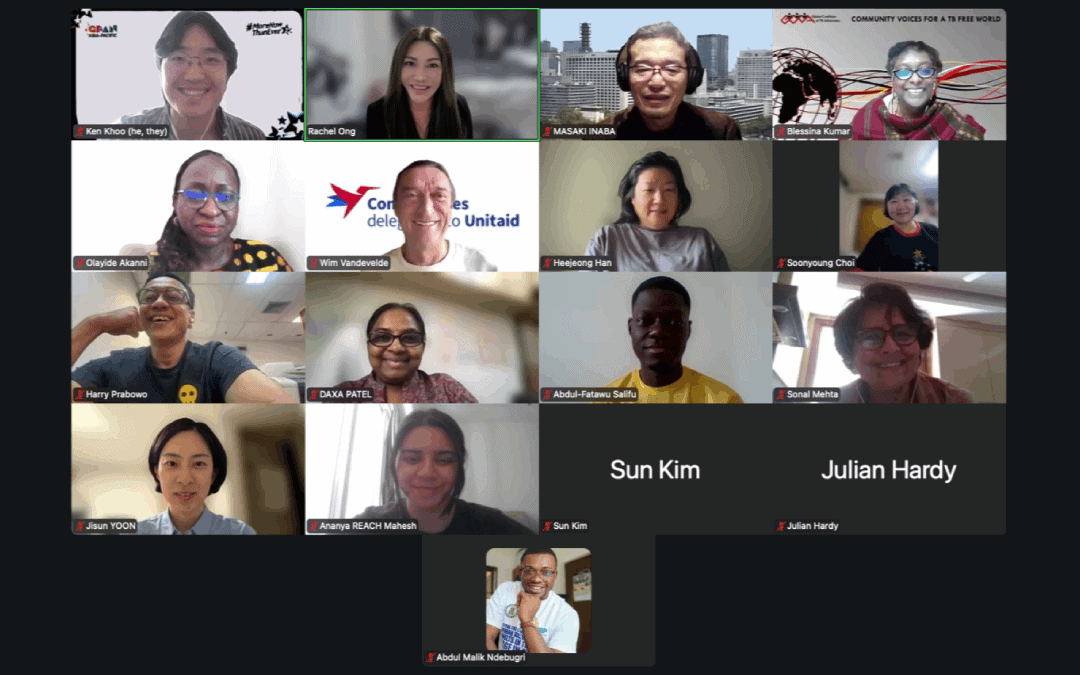
The Global Fund Advocates Network Asia-Pacific (GFAN AP) and Unitaid Advocates Network (UAN) jointly hosted a special discussion session titled “Strengthening Engagement of Asia-Pacific Advocates in Unitaid” on 17 December 2025, to share information and insight into Unitaid’s work and focus areas. The call set out to:
- Provide an overview of Unitaid processes, including governance, grantmaking & grant implementation.
- Discuss updates on key decisions from this month’s Unitaid Board Meeting.
- Explore avenues of engagement in Unitaid processes for Asia-Pacific community & civil society.
The webinar discussion was attended by approximately 20 participants and opened with introductions and welcome remarks by Rachel Ong (Regional Coordinator, GFAN AP), who noted that:
- While the Global Fund is the largest procurer of health commodities, Unitaid is vital for bringing new innovations to the ground; GFAN AP aims to coordinate and complement the work of both institutions.
- UAN as a platform ensures that equity, transparency, and accountability remain at the forefront of Unitaid’s agenda.
- 2026 will be a critical year for developing Unitaid’s new strategy, offering a moment to integrate Asia-Pacific priorities.
1. Introduction to Unitaid
Abdul-Fatawu Salifu (Alternate Board Member, Unitaid Communities Delegation) and Olayide Akanni (Alternate Board Member, Unitaid NGO Delegation) provided a brief introduction to Unitaid’s mandate, key priorities, and areas of focus:
- Unitaid is a lean, catalytic organisation hosted by the World Health Organisation (WHO) that focuses on introducing innovative health solutions and creating market availability.
- Unitaid has three strategic objectives:
- Firstly, the introduction of key health products.
- Secondly, creating systemic conditions for the rapid scale-up of health innovations in low- and middle-income countries (LMIC).
- Thirdly, fostering partnerships for demand generation and advocacy which ensure innovations are fit for purpose, fit for communities, and aligned with country priorities to encourage country ownership.
- Ultimately, Unitaid’s core mission is to bridge the access gap so that people in LMICs have timely and affordable access to new diagnostics and drugs, by working closely with the private sector, researchers, country-level partners, and global health institutions.
- Unitaid’s mandate has grown from its original focus on HIV, TB and malaria to include other focuses, such as maternal and child health, COVID, and pandemic preparedness and readiness (PPR).
- The Executive Board of Unitaid comprises 13 members, including one representative each from the five founding countries of Unitaid: Brazil, Chile, France, Norway, and the United Kingdom. The board also includes representatives from Spain, the Republic of Korea, African countries, the Gates Foundation, and two seats for civil society – one for communities and one for NGOs.
2. Introduction to the Communities Delegation and NGO Delegation
Abdul-Fatawu then presented on the role of the Unitaid Communities Delegation:
- The Communities Delegation is comprised of 35 members from “end user” communities of Unitaid’s innovations, including people living with and/or affected by HIV, TB, and malaria, among others.
- The Delegation is hosted by the Global Network of Persons Living with HIV in South Africa, with a mandate to ensure that Unitaid policies, priorities, and investments reflect equity, feasibility, acceptability, and is grounded in the lived realities of communities.
Olayide presented on the role of the Unitaid NGO Delegation:
- The NGO Delegation consists of a database of nearly 250 members and 11 key advisors with expertise in intellectual property (IP), patents, and specific diseases, with a liaison office hosted by STOPAIDS UK.
- The functions of the NGO Delegation include reviewing board governance, investment plans, and project proposals.
- The NGO and Communities Delegations work closely together to push for strong community and civil society engagement beyond community-level grant implementation.
3. Updates from the 48th Unitaid Executive Board Meeting
Next, Abdul-Fatawu and Olayide presented on key developments and outcomes from Unitaid’s 48th Executive Board Meeting:
- The mid-term review of the 2023-2027 Strategy confirms its relevance but raised concerns about the scalability of innovations given the tough global financing landscape. An ecosystem mapping exercise had also been conducted to identify Unitaid’s niche and contributions in global health.
- Key discussions were held around Strategic Objective 3 on strengthening community and civil society engagement (CCSE), with delegations presenting option papers to push for more robust engagement through early consultations with communities, more directive request for proposals (RFPs) around CCSE, and direct CCSE funding to ensure community priorities are validated and met.
- In response to declining official development assistance (ODA), three options for next generation financing were discussed: philanthropy platforms, catalytic blended financing, and results-based financing. Approval and allocation was granted to the Secretariat to pilot these mechanisms.
- Also approved were constituencies’ budgets for 2026 as well as the Governance Working Group (GWG) leadership and membership.
- Anne-Claire Amprou, French Ambassador for Global Health, was welcomed as the new Chair of the Executive Board and the term of the current Vice-chair, Cecilia Ishitani, was extended for 6 months, with the process to elect a new Vice-chair starting in the next 6 months.
On behalf of Daniel Townsend (Lead, Unitaid Advocates Network [UAN]) who was absent due to medical reasons, Rachel Ong also presented about UAN and the context of this collaboration call with GFAN AP:
- UAN is a platform of advocates hosted by the Global Fund Advocates Network that is dedicated to ensuring equity, transparency, and accountability in Unitaid’s agenda. Further information is available on the UAN website.
- As a catalytic organisation, Unitaid plays an important role in bringing new innovations to the ground, which greatly complements the Global Fund’s work as the biggest procurer of health commodities for HIV, TB and malaria. Noting this synergy, GFAN AP aims to complement both Unitaid and the Global Fund in future coordination efforts.
- Unitaid will begin developing its new Strategy in 2026, and is a critical moment for GFAN AP and advocates to bring issues relevant to Asia Pacific into Unitaid’s new Strategy.
4. Perspectives from Asia-Pacific partners
Civil society representatives were invited to present briefly on their involvement with Unitaid, beginning with Masaki Inaba (Co-chair and Programme Director for Global Health, Africa Japan Forum):
- Japan recently hosted the Unitaid board meeting and is a key donor focusing on innovation and involving the health industry in global health.
- Japanese civil society is working to monitor the government’s role as a donor and increase the visibility of civil society’s role within Unitaid, which has historically been less emphasised in Japan.
Next, Jisun Yoon (Director, Global Advocacy, Korean Advocates for Global Health [KAGH]) presented from KAGH’s perspective:
- KAGH’s mission is to reduce global health disparities, which is well aligned with Unitaid’s goal of increasing health access and promoting equality.
- Republic of Korea (ROK) was the second-largest donor to Unitaid in 2024 and is home to many innovative bio-companies.
- KAGH’s engagement with Unitaid are in three areas:
- Engagement with the bio-industry, serving as a vital link, encouraging the Korean bio-industry to engage with the global public procurement market.
- Parliamentary engagement, communicating to policymakers the unique capacity of Unitaid and collaboration opportunities.
- Media advocacy, increasing public awareness of Unitaid and global health by publicising Unitaid’s innovation cases.
- KAGH’s upcoming advocacy agenda include a focus on innovative finance (solidarity levies), fostering further engagement of the Korean bio-industry, and strengthening advocacy on the intersection of climate and health.
Blessina Kumar (Chair, GFAN AP Steering Committee; CEO, Global Coalition of TB Advocates), as part of the Unitaid NGO Delegation, also emphasised the need for direct funding to communities and affirmed the importance of greater inclusion of the Asia-Pacific region in Unitaid’s agenda moving forward.
The call concluded with warm appreciation and new year wishes to all participants by Rachel Ong.
PRESENTERS:
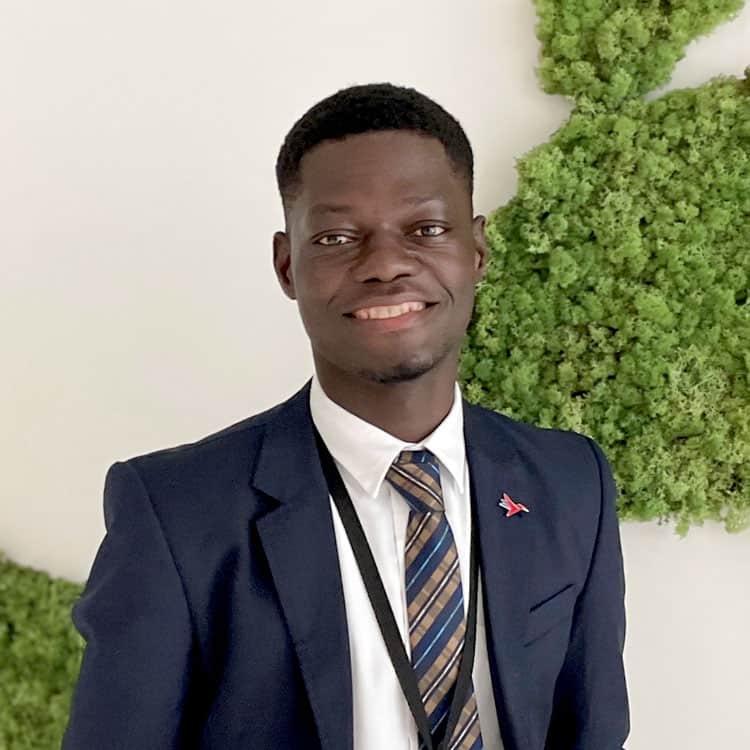
Abdul-Fatawu Salifu
Alternate Board Member, Unitaid Communities Delegation

Jisun Yoon
Director, Global Advocacy, Korean Advocates for Global Health


PRESENTATIONS:
-
- Unitaid EB48 Debrief. Presenter: Pauline Mazue, The Global Fund.
- Introduction of KAGH’s partnership with Unitaid. Presenter: Jisun Yoon, Korean Advocates for Global Health.