Reflections on the update on Resource Mobilisation at the 56th Global Fund Board Meeting, 28-30 October 2026.
Behind every replenishment pledge are people who depend on it: someone waiting for a TB diagnosis, a young person seeking HIV prevention without judgement, a community health worker reaching families at risk of malaria. For these communities, a successful replenishment means being able to access services when they need them.
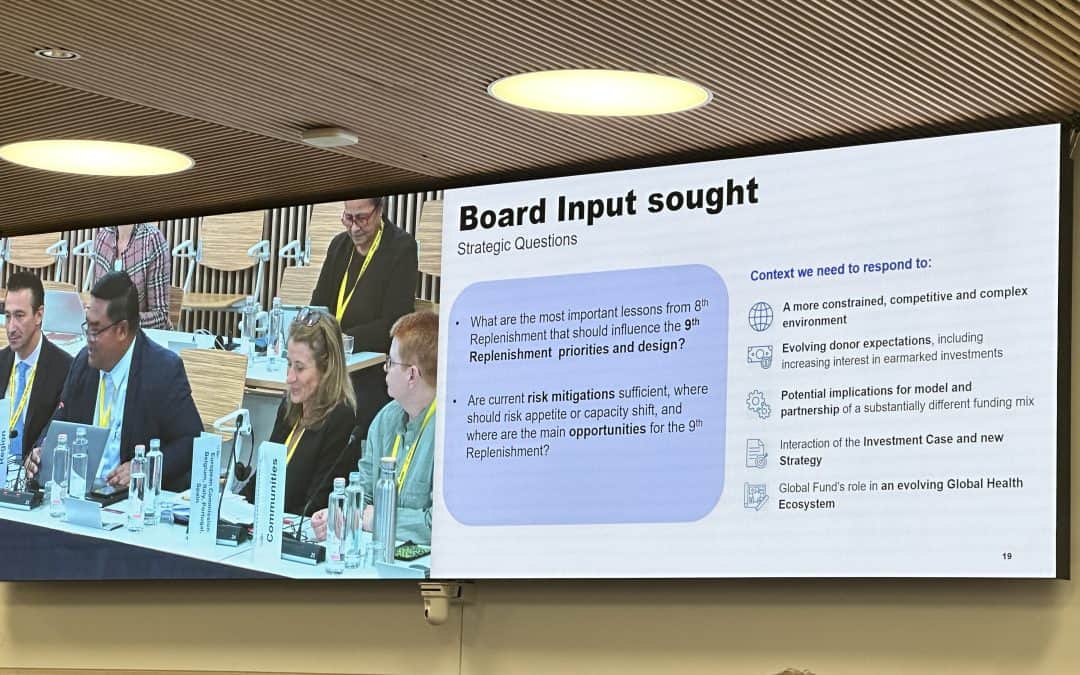
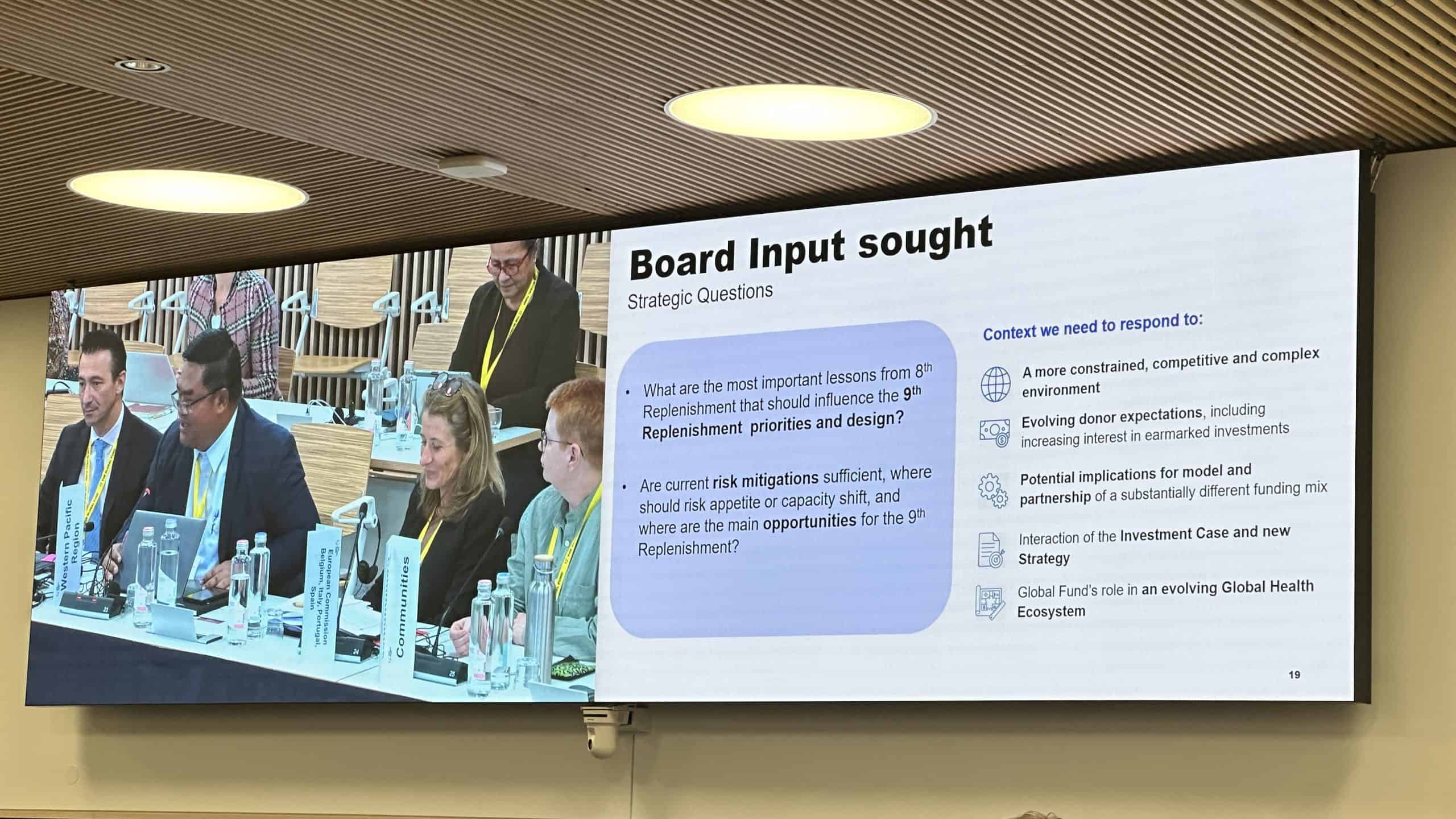
The resource mobilisation update and discussion at the 56th Global Fund Board Meeting a year after the Eighth Replenishment brought this responsibility into focus. Increasingly, donors face competing demands, health financing is under pressure, and the Global Fund amidst leadership changes is preparing for its Ninth Replenishment while developing its next strategy.
In a region where accelerated transitioning is taking place, for GFAN AP and our partners, this is a moment to organise early with concrete asks. We need more resources for communities and civil society beyond service provision and delivery for HIV, TB and malaria. We also need financing decisions that protect rights, strengthen community leadership and advocacy and sustain services through change.
Recognise the achievement – and keep the unmet need visible
The Eighth Replenishment raised US$12.68 billion. In a difficult political and financial environment, this represents an important commitment from donors and the wider partnership. It reflects sustained advocacy by communities, civil society, political champions and many others.
At 15% below the Seventh Replenishment, the smaller funding envelope leaves countries and communities facing difficult choices about what can be funded and what must wait. The country funding update makes the consequences clearer. The first two Grant Cycle 8 review windows identified approximately US$3.4 billion in technically approved interventions without secured funding. Indonesia alone accounted for US$174 million.
For advocacy, this distinction matters. These are identified opportunities to reach more people and improve health outcomes where the voices need to be amplified on what remains unfunded, who is affected and what additional investment could deliver.
It is important to challenge the assumption that communities can absorb repeated reductions through greater efficiency. Better use of resources matters but it cannot resolve every gap left by insufficient financing.
Follow the money from commitment to community
The update reported encouraging progress: US$2.88 billion in Eighth Replenishment cash receipts, reported as 24%, and signed agreements with 36 donors worth US$5.65 billion. However, Seventh Replenishment pledge conversion remained at 87% and the Developing Country NGO requested regular Audit and Finance Committee (AFC) follow-up on conversion, early notice of material funding changes, and clarity about protecting essential and community-led services if pledges are delayed or unfulfilled.
The Communities Delegation emphasised the importance of predictability. Organisations with small reserves cannot easily withstand certainty. Funding interruptions can affect staff retention, outreach and continuity of care. The people most affected will be those with the fewest alternative sources of support. It is therefore clear that advocacy efforts should follow the full journey of financing: from a public pledge to an agreement, from an agreement to payment, and from available resources to funded services.
The update shared that approximately 4% of the Eighth Replenishment are technical set-asides. Such assistance can support implementation, yet are not counted towards country grants. It is increasingly more important while recognising this contribution, to ask whether the set-asides are respond to country and community priorities in a coordinated manner across the various donors.
Community leadership must come with resources and influence
The Board discussion recognised the contribution of community voices to replenishment advocacy. The Developing Country NGO Constituency called for participation to be funded in a sustainable manner and for commitments to community, rights and gender to be reflected in implementation.
This speaks directly to the regional experience and priorities of the Asia-Pacific which see dwindling resources for both grant implementation and community and civil society-led monitoring and advocacy. Communities bring knowledge about who is missing from services, why programmes are failing to reach the people who need them and what needs to change. This involvement requires coordination, facilitation, time, preparation, accessible information and resources.
Transition must protect people through every step
Across Asia-Pacific, discussions about sustainability carry immediate consequences for community organisations and the people they serve. During the Country Funding Update discussion, the Southeast Asia Constituency called for transition approaches that reflect countries’ different health needs, financing capacities and circumstances as reflected in the paper which emphasised credible financing pathways, accountability and protection of community-led and key population services.
However, these commitments need to be tested against what happens in practice. A budget announcement does not guarantee that funds will be released on time. A social contracting policy does not guarantee that community organisations can access contracts or cover the real costs of delivery. Inclusion in a national health scheme does not automatically remove discrimination or other barriers to care.
For countries in transition or to face transition, the questions remain: Who will pay for each essential service? Can community organisations receive that funding? Are prevention, outreach, rights programmes and community-led monitoring and advocacy costs covered? What happens if domestic financing is delayed?
Progress and gaps should be documented and there is a continuous need for ensuring that contingency arrangements are in place before service interruptions. Countries can take greater financing responsibility with continuing to access targeted international support. Their readiness must be assessed through the services and populations concerned and with institutionalised communities and civil society support.
Welcome new financing while defending equitable decisions
The Board discussion highlighted opportunities to engage regional philanthropy, family offices, private wealth and emerging donors. With the G7 and the European Commission accounting for 78% of Eighth Replenishment pledges, diversification is important to diversify risks in a small group of donor capitals.
However, a broader donor base does not automatically mean more flexible funding. Restricted contributions can bring substantial additional resources while limiting which countries or interventions can benefit. The Malaria Impact Accelerator illustrates this balance. The Board approved the initiative recognising the opportunity to increase malaria financing and the risks involving donor influence, sustainability, implementation capacity and additional administrative demands.
Our advocacy should welcome additional investment and remain clear about the safeguards it requires. Country priorities, community participation, transparency and equitable access must guide decisions. Interventions that reach marginalised or geographically isolated populations may cost more to deliver; those costs need to be understood alongside the consequences of leaving people behind.
For Asia-Pacific, malaria elimination, cross-border needs and underserved populations need to be kept visible as new financing arrangements develop. At the same time, flexible core contributions remain essential to supporting needs that attract less donor attention.
Bring Asia-Pacific priorities into the strategy early
The Ninth Replenishment will be shaped by deision being made well before the next major funding appeal.
The next Global Fund strategy connects closely with replenishment preparations with consultations beginning in 2027, with the Strategy Framework approval anticipated in late 2027 and the full narrative in the second quarter of 2028.
This is a key opportunity to bring forward a shared regional agenda as reflected in #TheGlobalFundThatWeWant and #TheGlobalFundThatWeStillWant. It should reflect the diversity of our region, including countries facing high disease burdens, countries moving towards transition, and communities whose needs can be obscured by national averages.
We need an investment case that explains how international financing works alongside domestic investment in addition to returns on investment – and why continued support for communities, rights and equitable access is necessary to sustain results and gains.
Turning pledges into lasting support for Asia-Pacific communities
The resource mobilisation discussion made clear that securing a pledge is only the beginning: funding must arrive predictably and reach the people and organisations delivering services. For Asia-Pacific, this is especially important as countries navigate changes in external support and take on greater responsibility for financing their health responses. Community organisations need reliable resources to retain staff, sustain trusted services and reach people who would otherwise be left behind.
Engaging private philanthropies and foundations offers opportunities to expand support. These contributions should strengthen flexible, pooled funding that responds to country and community needs. Earmarking risks directing resources towards donor preferences while leaving less visible needs – including community systems, human rights and services for marginalised populations, community-led monitoring and advocacy – underfunded. Where restricted contributions are considered, they must bring additional resources, protect country ownership and equitable allocation, engage communities and civil society meaningfully, and remain subject to transparent oversight.
As preparations for the Ninth Replenishment begin, communities must have the resources and opportunities to shape decisions about what is funded and how. As the Global Fund remains Global, equitable resources and engagement will be essential to show what Global Fund investments achieves – and holding the partnership accountable for turning commitments into lasting community systems for resilient and sustainable health systems.