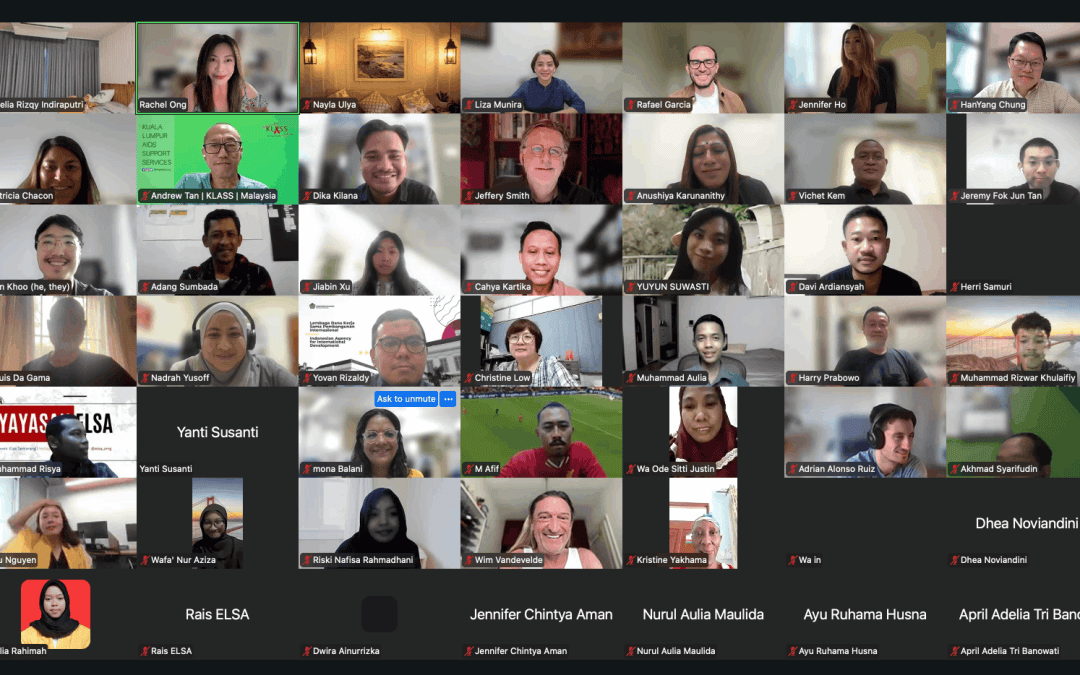
On 10 September 2025, Global Fund Advocates Network Asia-Pacific (GFAN AP), Joep Lange Institute (JLI), Malaysian AIDS Council (MAC), Malaysian AIDS Foundation (MAF), and the Center for Indonesia’s Strategic Development Initiatives (CISDI) jointly hosted the second webinar of a series focused on innovative financing titled “Debt2Health: From Theory to Action”.
This webinar series aims to build understanding of innovative financing by providing participants with a clear and accessible explanation of what innovative financing is, how it differs from traditional health financing mechanisms, and why it is relevant in the context of global health, particularly in the Asia-Pacific region. It also aims to showcase practical applications and lessons learned by highlighting real-world examples of innovative financing mechanisms, such as social impact bonds, health taxes, blended finance, and social contracting in the Asia-Pacific region, demonstrating their potential to address health financing challenges and improve health outcomes, while also discussing key lessons and challenges.
This second webinar instalment was attended by approximately 110 participants from Asia Pacific, Africa, North America, and Europe and was moderated by Jennifer Ho (Operations and Programmes Manager, GFAN AP). Dr Syarifah Liza Munira (Senior Advisor, Joep Lange Institute & former Director General, Health Policy Agency, Ministry of Health Indonesia) was invited as a key presenter to provide an overview of Debt2Health and country-level case studies through Indonesia’s Debt2Health experience.
1. Webinar #1 Recap & Framing | Diah Saminarsih, CISDI
The webinar commenced with brief welcome remarks from Jennifer Ho (GFAN AP). Next, Diah Saminarsih (CEO, CISDI) provided a recap of the first innovative financing webinar and framing for the upcoming Debt2Health discussion through a brief presentation titled “Country-Level Experiences in Innovative Health Financing”:
- Declining Official Development Assistance (ODA), combined with debt burdens and climate pressures, has created a fiscal crisis for lower-middle income countries (LMICs), exacerbating existing financial pressure from the COVID-19 pandemic.
- These dynamics highlight the urgent need for new, innovative mechanisms to sustain health systems and for longer-term investments in health, which range from voluntary contributions, such as traditional philanthropy and corporate partnerships, to more complex financial instruments, such as debt-to-health swaps and catalytic funding.
- Over the last three years, there have been innovations in the philanthropic model, such as through the Asian Venture Philanthropy Network (AVPN) Global Conference 2025 held in Hong Kong, where family philanthropy and corporate entities are involved in discussions on supporting development in LMICs.
- Still, innovative financing is a complement, not a substitute for ODA.
- Also important to note is that each tool has its strengths and limitations – what works for vaccine research and development may not work for long-term service delivery.
- Looking ahead, we need to move from global concepts to practical applications, especially in the Asia-Pacific region.
- The global and regional trends in health financing demonstrate an increase in debt-to-health swaps, solidarity taxes, and blended finance, which is highly relevant for the Asia-Pacific region where countries experience high levels of inequity, fiscal constraints, climate risks, and varying health risks in each country. The key challenge remains in translating global concepts into domestic fiscal policy.
- The trend of ODA for health from 2010 to 2022 shows a steady growth, with a sharp 40% decline in 2023, with further cuts expected from 2024 to 2027. The implication of this is volatility which undermines the sustainability of health aid, imposing direct risks to the progress of universal health coverage (UHC), and risking reversals to pandemic preparedness gains.

2. Debt2Health & the Indonesian Experience | Dr Syarifah Liza Munira, JLI
The webinar continued with a main presentation by Dr Syarifah Liza Munira titled “From Debt to Health: Lessons from Indonesia’s Trilateral Debt Swap Agreements”:
- Debt2Health is a resource mobilisation mechanism that unlocks funds for health by restructuring a country’s existing outstanding debt. It is a trilateral partnership
- While typical debt swaps are usually bilateral between two countries, Debt2Health is a trilateral partnership which involves three parties: the debtor country, the creditor country, and The Global Fund to Fight AIDS, Tuberculosis and Malaria (Global Fund), which manages the health investment.
- This trilateral model arguably delivers a lower transaction cost as it uses existing Global Fund mechanisms, which have rigorous standards of compliance, transparency, and alignment with national health strategies. Each agreement is negotiated individually, allowing for flexibility on terms like the investment amount and discount.
- Interest payments are outpacing growth in critical public expenditures, with net interest payments on public debt reaching US$847 billion in 2023, a nearly 30% increase of what it was in 2021. Servicing these debts has burdened countries’ budgets as net interest payments are reaching far higher levels than spending on health and education.
- Debt2Health was created against this backdrop to mobilise resources to restructure countries’ debts in agreement with creditor countries, while also mobilising resources for health.


- Through the Debt2Health process, a creditor country agrees to cancel a portion of a debtor country’s debt. In return, the debtor country invests an agreed-upon amount (a portion or all of the canceled debt) into the Global Fund, which is channeled back to the debtor country as additional grants for health. The investment also counts as the creditor country’s official contribution to the Global Fund, and unlocks additional resources for the Global Fund to fulfill “unfunded quality demand” – high-quality health proposals that were previously approved but lacked funding.

- Since 2007, there have been 14 Debt2Health transactions involving 14 countries. Indonesia has had 4 debt swap agreements in 2007, 2010, 2021, and 2024. The model has evolved significantly, from Indonesia’s initial deals (where 50% of the canceled debt was reinvested in health) to the latter two deals with a 100% reinvestment rate.
- Indonesia’s most recent Debt2Health agreement is the largest amount to date at US$75 million, which has supported HIV, TB and malaria health programmes with positive outcomes, as well as health system strengthening.

- Countries’ approach to debt swaps can change with their economic status. Contrasting 2007 to 2024, Indonesia transitioned from an LMIC to upper-middle income country (UMIC), and its increase from a 1:2 debt cancellation rate, which created more direct fiscal space at the time, to a 1:1 debt cancellation rate reflects its increased confidence.
- Looking ahead, future innovative financing mechanisms must solve specific problems or address specific ‘pain points’, such as unlocking tied-up resources or front-loading capital for vaccine production. It is also more efficient to leverage existing mechanisms and build upon established systems, such as the Debt2Health programme being a marriage of the debt swap model with the Global Fund’s mechanisms. Lastly, it is important to identify and empower policy champions within government and civil society to advocate for the successful implementation of such agreements.
3. Updates from the Financing for Development Conference & Global Health Implications | Rafael Garcia Aceves, JLI
Next, Rafael Garcia Aceves (Portfolio Manager, JLI) provided verbal updates from the fourth International Conference on Financing for Development (FfD4) held in Seville from 30 June–3 July 2025:
- While the conference did not deliver the large-scale agreements needed to fully meet global development and climate goals, it was a dynamic and productive space, which demonstrated that multilateralism is alive and many governments and stakeholders are still committed to finding pragmatic solutions and working together, despite global tensions.
- Issues discussed include ODAs, taxation, private sector engagement, and innovative financing, which showed that we do have options and paths to reach financing at the scale that is needed.
- A key highlight from FfD4 was the launch of the “Sevilla Platform for Action“, a mechanism put in place by the Spanish government to encourage countries and other actors to make tangible, voluntary commitments on a wide range of financing issues beyond what is in the official outcome document. Examples include:
- Promoting health taxes on products like tobacco and alcohol.
- Exploring new solidarity levies on aviation and ultra-wealthy individuals.
- A growing push for global tax reform through a UN convention on taxation.
- There was also significant discussion on data, transparency, and the governance of financing, such as mechanisms for countries to better organise, visualise, and coordinate needs and resources.
- There were also discussions on innovative financing mechanisms such as blended financing, impact investing, and debt swaps, as well as longer-term needs for reforming debt. This involved discussions about the cost of capital, assessments of risk for borrowing countries, and debt suspension clauses during times of crisis to free up resources for governments to invest where needed.
- A significant outcome from the conference was the establishment of a debt swaps hub supported by the Spanish government and others to provide technical support and capacity building for governments looking to implement debt swap agreements. It is important that debt swap agreements are framed not as a signal of debt distress, but as a strategic tool for channeling resources where investments are needed.
- As advocates, it is important to pushing for more partnerships and solidarity across sectors, with advocates in climate, environment, nutrition, etc. to strengthen mutual learning towards our common goal of sustainable financing.
4. Questions & Answers | Moderated by Chung Han Yang, MAC & MAF
Chung Han Yang (Deputy Executive Director, MAC & MAF) moderated the questions and answers session with participants.
- Louis Da Gama asked if there is a target list of countries for the Debt2Health model, as well as which Global Fund donor countries could be encouraged to use this model besides Germany & Australia. Noting that many countries have loans from China, Louis also asked if there have been any discussions or advocacy with China.
- Liza responded that the the viability of a deal depends on the specific debt relationship between a creditor and a debtor country. A key requirement is that the debtor nation must have the capacity to repay its loans; the model is designed for stable economies, not countries in severe debt distress. Currently, three creditor countries and 11 beneficiary countries have used the model. The new debt swap hub is expected to encourage more creditor nations to join. China has reportedly expressed interest in the debt swap model, but discussions are likely still in the early stages.
- Quentin Batréau asked, is debt distress signaling still a concern for countries, or less of an issue today than when Debt2Health started?
- Liza responded that the concern remains very important, especially for middle-income and emerging economies like Indonesia whose international credit ratings are critical. The Debt2Health model is carefully designed not to signal distress because it is a restructuring tool for countries that are capable of servicing their debt, rather than a bailout for countries that cannot. For a country like Indonesia, as its economy has grown, the importance of maintaining a strong financial reputation has increased, making this a key consideration in negotiations.
- Tabitha Ha asked, is the general trend for a 1:1 debt-to-investment ratio to be applied for UMICs and a lower ratio used for lower income countries?
- Liza responded that while there is no fixed rule and every agreement is negotiated individually, the clear trend is moving towards a 1:1 ratio. Several countries, including Mongolia and Sri Lanka, have already secured 1:1 debt swap agreements. While the final terms are always specific to the countries involved, the precedent for full debt reinvestment is growing stronger.
- Mona Balani asked, how does the Debt2Health process involve Country Coordinating Mechanism (CCM) members and who has the authority to determine debt reinvestment?
- Liza responded that typically, a creditor country such as Germany would make a large, upfront commitment to the Debt2Health initiative. Individual agreements are then carried out under this broader commitment. The strength of this model is that it “twins” the debt swap model with the Global Fund’s established and transparent processes. Resources are channeled directly into existing Global Fund grant mechanisms, where investments are overseen by the CCM, vetted by the Technical Review Panel, and aligned with countries’ national health strategies, ensuring high standards of compliance and accountability.
- Rais ELSA asked, how can the principles of trustworthy artificial intelligence (AI) be integrated into the Debt2Health (D2H) mechanism to enhance transparency and accountability?
- Rafael responded that there might be some potential to integrate AI in debt swap analyses, such as by identifying how transaction costs could become more affordable. That said, the current Debt2Health model already has strong, built-in accountability through Global Fund processes and the involvement of the CCM, which include oversight from communities and civil society.
- Liza added on that Debt2Health agreements must be country-owned and rooted in communities’ realities. Existing community-led monitoring and Global Fund mechanisms provide data on gaps which need to be filled by debt swap funds; optimisations to these mechanisms due to AI will only benefit future Debt2Health agreements as well as communities and civil society.
5. Closing Remarks | Rachel Ong, GFAN AP
The webinar concluded with closing remarks and appreciation by Rachel Ong (Regional Coordinator, GFAN AP) to the co-organisers, interpreters, speakers, and participants for an engaging discussion. Against the backdrop of big cuts to ODA, attention is turning to alternative funding modalities to bridge the growing funding gap, of which Debt2Health is a promising instrument for greater resource mobilisation to ease debt burdens and sustain progress in global health. As a closing activity, participants were invited to sign on to an advocacy letter to Germany in support of the Global Fund, ahead of further advocacy moments planned during the World Health Summit at Berlin in October.
SPEAKERS:

Diah Saminarsih
Founder & Chief Executive Officer, Center for Indonesia’s Strategic Development Initiatives (CISDI)

Dr Syarifah Liza Munira
Senior Advisor, Joep Lange Institute & former Director General, Health Policy Agency, Ministry of Health Indonesia
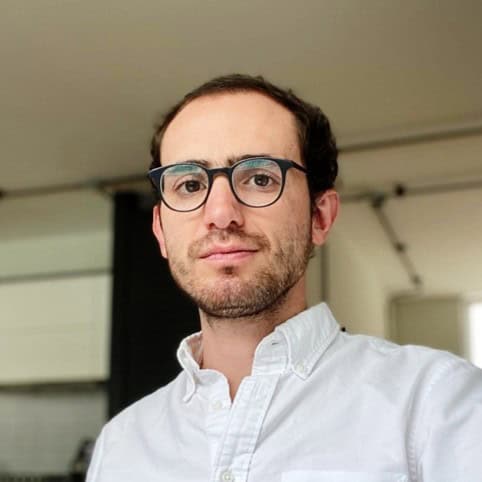
Rafael García Aceves
Portfolio Manager, Joep Lange Institute Center for Global Health Diplomacy
PRESENTATIONS:
-
- Country-Level Experiences in Innovative Health Financing. Presenter: Diah Saminarsih, CISDI
- From Debt to Health: Lessons from Indonesia’s Trilateral Debt Swap Agreements. Presenter: Dr Syarifah Liza Munira, JLI